
Viewing entries in
Creativity

No, also presentations cannot be designed by committee

No, also presentations cannot be designed by committee

Marketing, Investor relations, corporate communications, business development, everyone likes to have a say in the design of the next keynote address of the CEO at that important industry conference.

When the team "works" on a presentation, you usually get the following pattern:

  • Long meetings in a conference room, with a few people dialing in by phone (people who cannot see the slides), discussing the key messages on each slide
  • Long email exchanges without an organised discussion thread to log changes

Design by committee also does not work for presentations. Here is why it goes wrong:

  • In the end, you need to pick a consistent approach to the story. Mixing and matching parts of approach A and parts of approach B is not going to give you a "best of both worlds" result. The only way to get something consistent is to have one person write it.
  • A committee focuses on the slides, adding footnotes, changing headlines, shuffling the order. And while doing that, they feel like they are "programming" the verbatim of the CEO (who is not in the room). Wrong, in the end the CEO will pick his own story, sometimes despite the slides.
  • In a committee there is no one doing the real work, at the end of the meeting, the most junior person at the table probably gets tasked with "incorporate all comments into a new version and email it around by 9AM". That junior person might have dropped / not understood a few comments, and probably lacks the spine to push back against more senior executive in the company (who made a point that does not make sense).
  • You will for sure miss the contribution of introverts
  • The casual observer in a committee meeting often does not have the in-depth understanding of how the presentation is built, and what is written on which slide. As a result, noticing that important elements are missing, she will suggest to add comments, bubbles, and footnotes on random slides to make sure that the key messages are "at least written down somewhere".
  • Committees under time pressure like to give drastic input. After a 3 hour discussion: "oh yeah, the deck is too long, collapse 35 slides into 10", leaving the junior team member confused what to do.

A better approach:

  • Interview the CEO/the person who is actually going to give the talk
  • Get the committee together and "shake the tree" for all messages and issues that need to be included
  • Now, design the whole deck start to finish
  • Then ask input from the committee and be tough with accepting comments

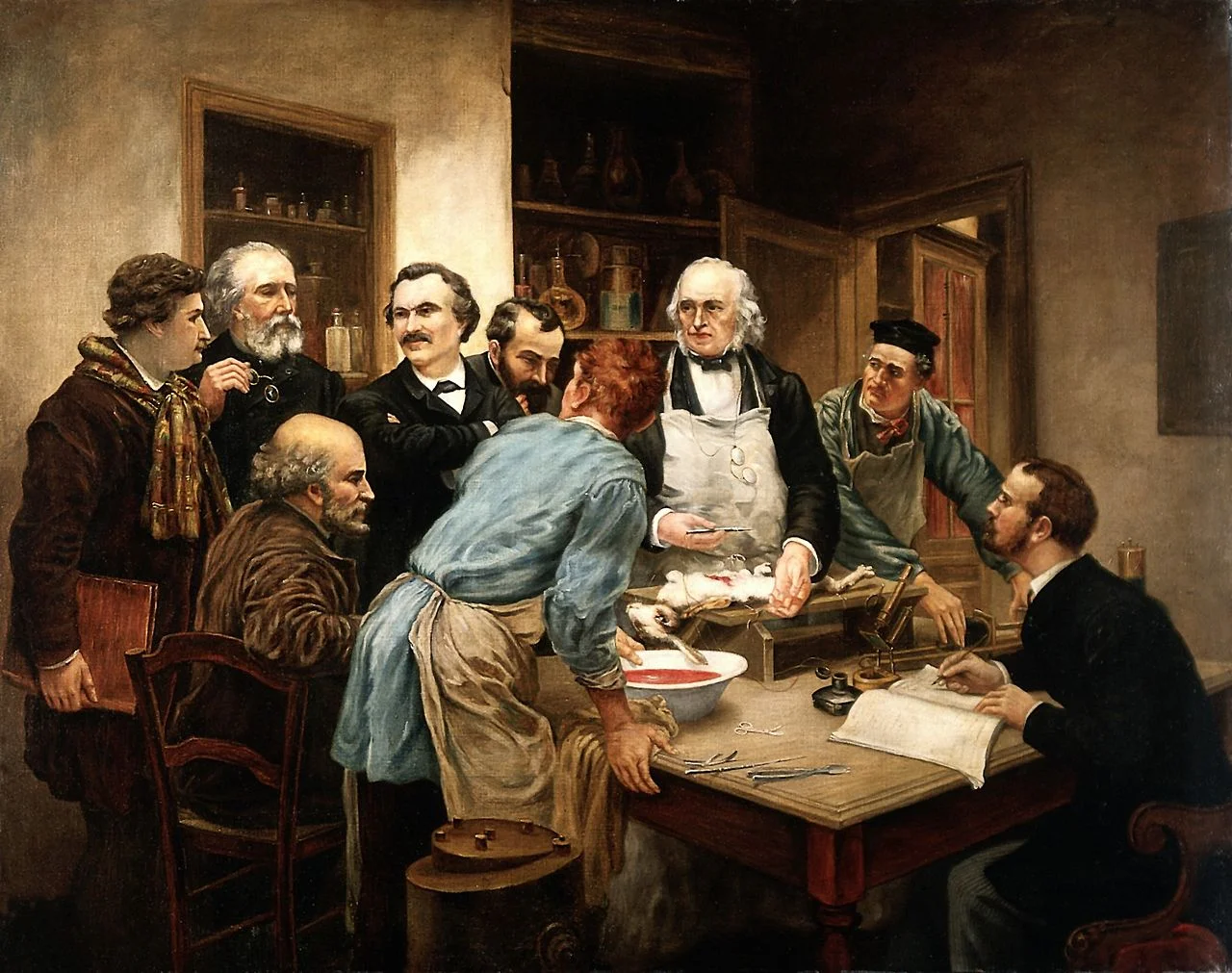
Art: Claude Bernard and his pupils. Oil painting after Léon-Augus Wellcome

SlideMagic: a platform for magical presentations. Free student plan available. LEARN MORE
SlideMagic as a sketch board

SlideMagic as a sketch board

Some of you out there are probably still afraid of using a new presentation design tool that is still in beta for live presentations. Here is another way to get started: use SlideMagic as your sketch board.

Many of you use bullet points to sketch out the content of a presentation. Maybe in a word processor, maybe in PowerPoint. The problem is that once you have iterated those bullets and everyone agrees to them, it is hard to turn those lists into visual designs.

Here is where SlideMagic could come in handy. It is very easy to set up charts that are not lists: a quick table, a quick contrast between two options, a quick 2x2. Jot your ideas down, and if you set your accent colour and logo, the whole sketch board will probably look better than a finished end product in PowerPoint.

Use SlideMagic to form your first ideas of your presentation, until the moment has arrived when you "have to" translate the designs to PowerPoint or Keynote. You can of course, but I think many of you will find that it is much easier to stick to SlideMagic after trying a few pages.  


Art: an unfinished painting by William Berryman, created between 1808 and 1816

SlideMagic: a platform for magical presentations. Free student plan available. LEARN MORE

You cannot force creativity

You cannot force creativity

I tend to work on presentation design projects in bursts: dive in, get stuck, put it away, work on another project, get back to it, put it away again.

Even when you stop working on something consciously, your subconscious mind continues to chew on things. This article discusses recent research that proves that the subconscious brain can solve real problems.

There is another benefit of this delayed approach. When you get back into things some details of the story have faded to the background a bit. It is this "numb" state of mind that is useful to piece together the story that really matters, you have to explain it to yourself again and it might come out clearer without the distraction of these details. In addition, other details might come to the forefront which you thoughts were not important.

All of this explains why presentations that are created at 3AM at night before the 9AM meeting are not very creative (most management consulting projects). It also explains why an outsider or senior executive/partner can walk into a room and articulate a story much better in 3 minutes than an entire team who has been working on it 24/7 for the past 3 months. It not all experience, it is also being able to take some distance from the subject.

What to do? Start thinking early about the presentation of your results. The problem of how to communicate your project, is a different one from the problem that your project solved (read that sentence again). While you still might end up finishing your presentation at 3AM, if you started early enough to think about it, your presentation will be much more effective. 


Art: The Inspiration of Saint Matthew by Caravaggio, 1602
Subscribe to this blog, follow me on Twitter

SlideMagic: a platform for magical presentations. Free student plan available. LEARN MORE