
Scientists speaking over dinner

Yesterday evening I attended a dinner in honor of a famous scientist who received a honorary doctorate from Tel Aviv university. The setting was a beautiful coast-side villa of a successful businessmen, the audience: scientists and healthcare technology investors (corporate and venture capital). On the menu: some good food and 6 presentations. Here are some suggestions for scientists who get put “on the menu” for these types of events.

Investors. You have 6 minutes, you have 2 audiences: scientists and investors. This is probably not the right time to get insightful feedback from your science colleagues, however, you might hook the attention from a potential investor in your research you would not have met otherwise. So take the investor as your target audience and shape your content for her. Out with the detailed methodology, the detailed statistics, the history of your research, but in with the need (why is this such a horrible disease and how many people suffer from it), why is what you did so clever (other technologies fail, yours takes a fundamentally different approach), and why the early trial data shows that it works. And oh, if you are raising money for your project, say so.

Only charts when you need them. Six minutes: no bullet points, just pictures you need (statistical data, pictures of team members). Put black slides if you do not need the projector. A huge white screen in a dark garden completely overpowers the presenter.

Simplified statistics. Putting up the full scientifically responsible data chart over dinner is not effective. Laymen do not know how to read it. First explain what benchmark matters (survival rate for example). Then, make an incredibly simple char that compares the 2 benchmarks without the footnotes, n values, p values, standard deviation. All that can be discussed over coffee, not a glass of wine.

Stick to your time. If you have 6 minutes, use 6 minutes. Bringing along your 45 minute deck and trying to speed things up by talking faster and skipping slides does not create a compelling experience.

Stories. Put in some anecdotes to make your story more memorable.

Cut the gore. Images can be very powerful in presentations, but some medical photos are better be seen before dinner, not during.

SlideMagic: a platform for magical presentations. Free student plan available. LEARN MORE
More than 3 pages

Many presentation I come across start out great with the cover slide, and maybe a page or 2 after tat, then the whole thing slides back into bullet point mode. Why not continue the good work beyond page 3?

SlideMagic: a platform for magical presentations. Free student plan available. LEARN MORE

Skip the methodology

As a management consultant (or a scientist) you had to crack a very difficult issue: what approach to take to solve a particular problem or get to some insight. Once the approach was nailed, the rest of the work was relatively easy (sweat work rather than think work).

It is tempting to use this thought process as a structure of your presentation. Here is the problem, here is the theory behind it, here is our methodology, here is the data analysis, and finally, here is the conclusion. Most scientific papers are structured this way and kids get taught this approach in school/university.

This works if your audience also consists of management consultants and scientists. In most other cases, just talk about the problem you tried to solve (the actual one, not the approach issue) and then go straight to the conclusion and results.

SlideMagic: a platform for magical presentations. Free student plan available. LEARN MORE

Business models in a VC pitch

Fred Wilson wrote an interesting blog post yesterday about the sequence in which a startup should nail the following items:
  1. First the product
  2. Only then the strategy (who is your target market, and how are you reaching them)
  3. Only then the business model (how you charge for things)
Most VCs will ask you about the business model and strategy in your early-stage investor pitch. The true answer: “I do not know yet”. Stopping the discussion there is not a good answer. Making up something and selling it is the truth and the only truth might cost you credibility points.

The middle ground is better. Admit that things are early, and discuss 1-2 strategy/business models scenarios that seem sensible given the stage of development you are at and what you know about the market at the moment. It shows that you are a sane person and a trusted pair of hands as you embark with your investor on an uncertain journey in which everything will deviate from plan for sure.

A bit of ambiguity in your pitch is OK.

SlideMagic: a platform for magical presentations. Free student plan available. LEARN MORE

Too vague or too detailed?

The corporate strategy of a big company is always complex: many countries, many products, marketing, sales, manufacturing, organisation, finance, tax optimisation, M&A. Writing all that stuff down in an investor presentation does not make compelling prose.

Most companies understand that but swing the other way: a big vague broad mission statement that says we will conquer the world of [ENTER MARKET] and make the plant a better place at the same time.

Here is a potential middle ground. Start with the 3-5 really big ideas that will create growth for your company, pretty much like a startup would present its ambitious plans. Then follow with a more organised, structured, traditional overview of all the programs that are going on. Not to be discussed in detail, but merely to show that you have put them in place.

SlideMagic: a platform for magical presentations. Free student plan available. LEARN MORE

Trying out Medium

Medium is a new publishing platform and I gave it a try with a first post on how bad design habits from the 1990s still cause dammage today (overhead transparencies, word processors).

Medium allows you to create collections and I started one about presentation design, pitching ideas, and public speaking under the name “Seeing is believing”. Feel free to contribute.

Although I like the clean design and focus on writing of Medium, it is too early for me to give up the good old Blogger platform, with many of you reading my posts via RSS and email updates.

SlideMagic: a platform for magical presentations. Free student plan available. LEARN MORE

A bit of detail can help

The objective of a technology sales presentation is to convince your potential client of how great your product is, and how poor the competition.

Assumption: the above is actually true, which makes designing a presentation a lot easier.

One approach is to list all the benefits, and in a few more charts show that the competition does not have them (most of the times, without naming names explicitly). This story does not stick very well, a feature list that seem unrelated.

Better is to dive in a bit into the detail. Often technical products have one specific innovation, one characteristic of the architecture, one design approach that triggers all of the goodness mentioned above. Now that the customer understands this (and Einstein said that you can explain anything to everyone - even a 6 year old), it becomes a lot easier for her to understand the full picture.

SlideMagic: a platform for magical presentations. Free student plan available. LEARN MORE

Investor investor presentations

Yes, most venture capital (VC) and private equity (PE) investors need to rais money themselves, usually from institutional investors (large insurance companies and asset managers).

When pitching, these investors often make the same mistakes the companies pitching to them make.  The most common one: a story that is not very differentiated. Careful deal selection, deep involvement with your portfolio companies, really working with management. Institutional investors get pitched all the time by VC/PE funds that say exactly the same thing.

The best VC/PE investor pitches are those that tell a story about a really distinctive type of investor, where everything reinforces each other: the backgrounds of the investment team, the deals you picked, the exit track record. Some funds have great access to deal flow in the telecom industry, some funds are really good in bidding for privatizations, some are really good in turnarounds, some have a really deep understanding of bio molecular structures,  some have a unique skill in stitching together innovative financing structures. It is very rare that all of the above work for one fund.

SlideMagic: a platform for magical presentations. Free student plan available. LEARN MORE

Presentation lessons from TED

Chris Anderson is the curator of TED and has written an article with some excellent suggestion on how to give a presentation of TED-like quality. Some of the points discussed in the article:

  • Plan your story: beginning, middle, end
  • No jargon, keep things conversational, cut back on the ego, show that you are vulnerable
  • People do not relate to descriptions of organisations/institutions
  • Do not try to cover too much ground, you need to go into some level of detail to keep things interesting
  • Let the audience draw conclusions themselves, not everything has to be spoon-fed
  • Really, really, memorize your talk in order to be spontaneous. Sort-of memorising is the worst, you are not your improvising self, but the words do not flow either with frequent memory pauses giving away that you are playing off a script
  • When rehearsing, think what feedback you need to take in, and what not. Usually, experienced speakers give the most useful feedback
  • Stay relatively stationary on stage, emphasise with arm gestures, keep eye contact with a few people in the audience
  • Use slides only if you have to make a point that needs visual backup
  • When using video: keep it short, and think twice before including a sound track
  • Final advice: be yourself

SlideMagic: a platform for magical presentations. Free student plan available. LEARN MORE

The 1-1 institutional IR meeting

I am starting to work with the CEO of a very large company to design a presentation for 1-on-1 meetings with institutional investors. I am thinking of a presentation designed for iPad, or even a loose stack of slide print outs that can be randomly selected as the need comes up in the meeting.

The big story of the company can probably be explained verbally in a conversation, these slides that are typically included in a presentation for a big audience can be left out. But then, equity analysts are likely to have detailed questions that require factual backup slides that are denser in design than the ones you would typically use for a large audience investor update.

An interesting project.

SlideMagic: a platform for magical presentations. Free student plan available. LEARN MORE

DIY shapes

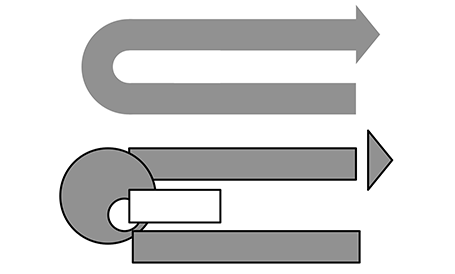
It is hard to get an arrow to point exactly right in PowerPoint. If the standard shapes fail, why not construct your own out of small individual bits. You can group the shape together, or create a new custom shape with one of the shape boolean functions (Windows instructions here, on a Mac: select 2 shapes, right click, go in the grouping menu).

SlideMagic: a platform for magical presentations. Free student plan available. LEARN MORE

Just a confidence booster?

Often, I see that the slide deck is just a confidence booster for the presenter of a new story. Having those beautifully designed slides behind you makes sure you will not s**w up. Over time, you become more and more confident in delivering the story, your slides get bolder and more minimalist, until finally, you do not need them anymore.

But, without that slide deck on day 1, you would not have gotten to that level of story telling...

SlideMagic: a platform for magical presentations. Free student plan available. LEARN MORE

Flowboard - presentations on iPad

Flowboard is a presentation design app for iPad. In the TechCrunch video below, the company CEO gives a quick demo of the product.


I am curious to hear your feedback on designing presentations on a tablet in a new app (using an iPad to display them is a no brainer). I can see the advantages of mobility, the touch interface, but on the other there are drawbacks: screen size, lack of navigation precision, incompatible file formats, and file management problems.

SlideMagic: a platform for magical presentations. Free student plan available. LEARN MORE

VC presentation parody

This cartoon of Nikola Tesla (who do you say?) pitching VCs highlights many of the dynamics that are happening in VC pitch meetings (unfortunately).


Two comments to this though:
  1. While entrepreneurs have no shortage of ideas to make a parody about VCs, I think VCs might have equally rich material to make fun of entrepreneurs pitching. 
  2. But more importantly, anticipate this sort of VC behaviour. In this video the entrepreneur did not manage to get across what it is that he is actually doing early enough, and as a result the investor focused more on their email. VCs probably make up their mind whether something is worth listening to in the first few minutes of your pitch, partly maybe because they are arrogant, but also partly because it is the only way to deal with thousands of ideas being thrown your way. Get that elevator pitch ready, and the objective of the elevator pitch is not to land the investment, but to get the attention for the next 20 minutes.

SlideMagic: a platform for magical presentations. Free student plan available. LEARN MORE

Put things in perspective

I just returned from a camping and hiking trip in Israel’s southern desert (the Negev) and came home with some beautiful pictures.

It is very hard to capture the sheer size of a landscape in a photo, and one trick to do this is the make sure to have an object in your frame that the viewer knows the size of. In the example below you see that the perspective greatly diminishes when I Photoshop my friends out.


The same is true with data in presentations. Putting the stunning image with the word “53 million” on it does not put the size of the number in perspective. Relate it to something instead.

SlideMagic: a platform for magical presentations. Free student plan available. LEARN MORE

You understand everything?

An aspiring presentation designer asked me this question. “You really are confident that you can grasp any story that is thrown at you (scientific, financial)?” I answered positive.

Yes, I have some background in business, engineering, and financial analysis, but there are cases where I do not get it the first time around. I do not think that that is my problem though, if I do not get it, the audience of reasonably intelligent people will not either. Time to try to explain it to me again.

I am not embarrassed to ask stupid questions, and never say that I got it when I did not.

SlideMagic: a platform for magical presentations. Free student plan available. LEARN MORE

Tell people what they should see

What is clear to you is hardly ever clear to everyone in the audience. A screen shot with a cleverly integrated login feature, a photo of a long line of people who cannot wait to try your product, an image of an unhappy customer. When in doubt, put a big call out or title that says what the audience is expected to see.

SlideMagic: a platform for magical presentations. Free student plan available. LEARN MORE

Oops, doesn't fit

PowerPoint is not very good at creating line breaks in a shape. With lots of space left, it breaks your long word (&lquo;management” is a favourite) to the next line. Two things you can do:
  1. Right click the shape, hit format shape, select text box and un-tick the wrap-text-in-shape box. Now you can make your own line breaks
  2. For bigger fonts a 1.0 leading between lines is too much. Select the shape, click format, go to paragraph, and set the line spacing to multiple and put in the value 0.8 or 0.9 instead of 1.0.

SlideMagic: a platform for magical presentations. Free student plan available. LEARN MORE

Viewer churn

The big challenge of website design is people clicking away to more interesting places. when you send a pitch deck without verbal explanation, you have the same challenge. Will your prospective customer or investor make it all the way to the end? Maybe presentation designers can learn from web designers?

 I was brainstorming this with a client the other day. We were thinking about how to include a fake demo in the presentation. Demos always look better with the biggest possible screen shots. The result however, is a very large presentation and the viewer might not make it to the end. A possible solution: add big PREVIOUS and NEXT arrows to the left and right of the screen, maybe a counter (Demo slide 4/12) and a bit SKIP button to keep the viewer on board.

Just a random idea, I need to think more about how to add navigation that is actually useful inside a presentation.

SlideMagic: a platform for magical presentations. Free student plan available. LEARN MORE

Preaching to the converted

Most sales presentations go on and on and on about an issue that the client might already be convinced of. Worse, if you present slide after slide in an amateurish format making the same point, your client might actually start to doubt what she believed when entering the meeting room.

That is time and slides wasted. More time efficient and effective ways to tackle this:
  1. A couple of really professional and serious looking slides with the highlights, plus an invitation to visit your web page for all the details
  2. Discussing the weakness of your competitors verbally and informally: it is hard to put this on paper. Suggest your client some tough questions to ask when they meet the competition. Note that this is actually a presentation design challenge, without creating the actual slides. You need to have this story prepared, maybe even with the help of a “spontaneous” flip chart sketch
Now spend the time you gained on the issues that really matter: are you expensive, is it hard to switch supplier, etc.? Preaching to the converted is never a good use of time.

SlideMagic: a platform for magical presentations. Free student plan available. LEARN MORE